Saturday, March 26, 2011

The discovery and early establishment
Having founded the company Dodge Brothers Company by Horace and John Dodge in 1900, this company makes engine components and chassis of the vehicle. John Dodge in 1913 saying that he no longer willing to simply as "penyetok" for Henry Ford, then in 1914 he and Horace agreed to make a 4-cylinder vehicles (Dodge Model 30). They made this car has all-steel body, while most other companies still have the element of wood. Besides the existing 12 volt electrical system, (cars with 6 volt electrical system was still there until the 1950s) and a sliding-gear transmission. The company developed the Dodge brothers were successful because the quality is good, and the company soon became the second largest company by sales in the U.S. market in 1916.

 Dodge Company continues to record good sales until 1920. But after that, John Dodge died of pneumonia in early January 1920. His brother, Horace, also died in December 1920 due to cirrhosis. Company Dodge brothers fell into the hands of their wives, who then lifted Frederick Haynes became president of the company. Dodge Model 30 was developed into Dodge Model 116, with basic construction and the same features.
Dodge models sold in North America today is the caliber, Avenger, Charger, Challanger, Viper, Journey, Nitro, and Grand Caravan.

Audi Slogan is Vorsprung durch Technik , which can be interpreted "Advantage through technology".
History
The company was originally founded in 1909 by August Horch. The first car created by Audi, Audi-powered Type A 10 22 hp Sport-Phaeton, produced in 1910 in Zwickau.
After many series of events, August Horch left the company in 1920 as was named Minister of Transport. In August 1928, Jorgen Rasmussen, owner of DKW firm acquired most of the Audi shares. Rasmussen also buy an American car company Rickenbaker, including development tools for 8 cylinder engine. This machine is used in Audi Zwickau and Audi Dresden, which was launched a year later. At that time the cars Audi is a luxury car with special workmanship.

In 1932, Audi, together with Horch, DKW and Wanderer to form Auto Union joined. Before the advent of World War II, Auto Union was the one who makes a ring Audi logo 4 pieces interlocking to each other, which is still used today. In those days, the symbol that is used to signify the merging of four brands.
After World War II ended, Auto Union was once bought by Mercedes-Benz in 1958. But Mercedes-Benz did not focus on this brand so it can not generate profit. Then in 1964, shares of Auto Union captured 50% by Volkswagen.
1969, changed the company name became Audi NSU Auto Union AG, after joining the NSU Auto Union. Noted ever launched several types of cars such as Audi 100, Audi 80 and Audi 50.
The company name was changed again in 1985 to only just because the brand Audi AG NSU and Auto Union no longer in use.
Monday, March 14, 2011
The luxury Lifestyle blog (the home of luxury Lifestyle) presents 2011 Hurun Best of the Best Awards.

Luxury-brand awareness is growing among China’s super rich, who recognize 20% more of the lavish brands than they did last year, according to the Hurun Report.
The 2011 Best of The Best Survey, which interviewed 401 Chinese mainland millionaires, each with assets of more than 10 million yuan ($1.5 million), said the super rich in China are developing more sophisticated tastes in luxury products.
“Chinese entrepreneurs are getting more and more sophisticated, discerning and confident in their personal style, and what they aspire to, as they try to turn new money into old money,” said Rupert Hoogewerf, founder of the Hurun Report.
“The time for China to learn from Europe is over. People here are becoming better educated. They are getting to know luxury brands that are not even familiar to some Europeans,” Hoogewerf said.
According to the 2010 Hurun Wealth Report, released in April, there are 875,000 multimillionaires and 55,000 billionaires in China, or 6.1 percent more millionaires and 7.8 percent more billionaires than last year.
This year, Louis Vuitton was again No 1 in the top ten overall most popular luxury brands among China’s super rich.
Hermes rose to second place from fourth last year, and Chanel stayed in third place. Cartier was fourth and Gucci remained in fifth.
Cartier was the No 1 overall jewelry brand for the sixth year running, and Patek Philippe the leading luxury watch brand for the third time.
Luxury watches and jewelry continue to rank as the top collectibles for the rich, according to 44 percent of respondents, up by 10 percent over last year. Meanwhile, more of the wealthy prefer collecting red wine to luxury cars, the survey found.
The report also found that the Chinese rich like to travel abroad more and four out of five millionaires consider educating their children overseas.
“Luxury brands have a very special place in China, as there is strong gift-giving culture here. Lots of people like to receive luxury brands to improve their status. It’s a noticeable trend,” Hoogewerf said
Via China Daily
Similar Posts:
Mubarak: World’s Richest Man?
Spain’s hotels are Europe’s most popular
Hotel Indigo coming to Phuket, Thailand, in 2014
Morgans Hotel Group Unveil the Mondrian SoHo
High-end hotelier Autograph lands in Europe
Supper Clubs a Comeback at Ritz Carlton, Palm Beach
Save and share 2011 Hurun Best of the Best Awards
To share this post with your family and friends? Click the button below to send them an email or save this to your favorite social network.
Thursday, March 10, 2011
The luxury Lifestyle blog (the home of luxury Lifestyle) presents YSL’s Manifesto Spring/Summer 2011.

Yves Saint Laurent will be launching its much-awaited Spring/Summer 2011 Manifesto on 5 March.
The publication will be released in major cities including London, Paris, New York, Milan, Tokyo, Hong Kong and, for the first time, Los Angeles.
‘La Manifesto’ features images starring face of YSL‘s S/S ’11 campaign, Arizona Muse, which has been photographed by Inez van Lamsweerde and Vinoodh Matadin.
It will be distributed to the first 2,000 passers by in each city and will include a special tote bag.
The S/S 2011 Manifesto will mark the eighth edition of this publication. Each Manifesto is a celebration of the latest collections from the Yves Saint Laurent brand.
The Yves Saint Laurent Manifesto was the brainchild of the luxury brand’s creative director, Stefano Pilati.

Louis Vuitton Men’s S/S 2011 Ad Campaign
China’s middle class stampede for luxury handbags
Miu Miu Crystal Matelasse Bag
LUX Beauty Bag: Au Naturel
Most Expensive Purses
Save and share YSL’s Manifesto Spring/Summer 2011
To share this post with your family and friends? Click the button below to send them an email or save this to your favorite social network.
The luxury Lifestyle blog (the home of luxury Lifestyle) presents Louis Vuitton Men’s S/S 2011 Ad Campaign.

Louis Vuitton’s ad campaign for their Spring/Summer 2011 collection is out. It stars Taiwanese actor Godfrey Gao and Doug Pickett, photographed by Cédric Buchet.
The campaign also features bags from the S/S 2011 Menswear Collection: Monogram Impression Sac Weekend, Utah Cabas Zippe, and Damier Graphite Elvis.


China’s middle class stampede for luxury handbags
Blake Lively for Chanel Ad Campaign
Miu Miu Crystal Matelasse Bag
LUX Beauty Bag: Au Naturel
Most Expensive Purses
Camila Alves Talks Muxo Handbags
Save and share Louis Vuitton Men’s S/S 2011 Ad Campaign
To share this post with your family and friends? Click the button below to send them an email or save this to your favorite social network.
The luxury Lifestyle blog (the home of luxury Lifestyle) presents China’s middle class stampede for luxury handbags.

It could be a queue for a pop concert, a top nightclub or even the opening night at the theatre. But the hundreds of people lined up in a Hong Kong street are actually waiting to bag a bit of luxury.
“We’re looking for new handbags,” says student Celeste Law as she queues patiently alongside her friend Karina Luh outside the supermarket-sized branch of Chanel on Hong Kong’s Canton Road.
The students, both 20, already sport impressive accessories — Celeste carries a Louis Vuitton monogrammed bag, while her friend’s is from Chanel.
Both work part-time and saved for over a year to buy their trophies.
“We want them because of the famous brand,” said Celeste. “What can I say? People will focus on your bag. It’s about feeling confident.”
Even on a weekday morning, Canton Road is flooded with shoppers happy to pay a small fortune for a luxury tote, shoulder bag or evening clutch in its jumbo designer stores.
Many are from the Chinese mainland, and some even carry suitcases to get their purchases home. The market for such luxury has extended far beyond China’s roughly 900,000 US dollar millionaires.
The market is now being driven by China’s burgeoning middle class, with the truly rich going ever further upmarket — happily spending tens of thousands of dollars on the right bag.

“We believe we have only begun to scratch the surface of China’s potential,” Suhl added.
The brokerage firm CLSA Asia-Pacific Markets predicts China will become the world’s largest luxury goods market by 2020, accounting for 44 percent of worldwide sales and bigger than the entire global market is now.
Christina Ko, who blogs at HK Fashion Geek, said the Asian love of the luxury bag has become “a cultural fact. In the same way that Asians prefer rice to potatoes, they also prefer luxury handbags to non-branded ones.”
But as customers become more sophisticated, the demand is changing — bringing those who would previously have bought fakes into the market for the real thing.
“Middle class people are getting the Louis Vuitton bags, and the people who used to get them are now looking for something else,” Amanda Lee, who writes the Hong Kong-based blog Fashionography, told AFP.
Zuki Ho, a sales associate and mother, is one of the middle-class buyers boosting the industry: she owns 15 luxury handbags, and once spent HK$40,000 (US $5,135) “double her monthly salary” on a handbag.
She says she loves handbags because “I enjoy being watched on the street when I’m carrying the bag.” But she would never buy a fake — “I’m afraid of being found out,” she added.
Fakes remain big business in China, but genuine luxury is bigger.
And while women are a growing force in the Chinese designer market, men are not immune, competing fiercely over the most stylish ‘man bag’.
At the second-hand luxury handbag store Milan Station in Hong Kong’s upmarket Central district, bags sometimes sell for more than their retail price.
“People always ask for some kind of limited edition, a more expensive bag,” supervisor Jackie Lau told AFP. “People don’t feel guilty about it (buying a designer bag) because it’s like an investment.”
Customers can trade in their bags and take to the streets with a new one as often as they like, while those lucky enough to make it onto waiting lists for limited-edition bags can sell them straight to a second-hand store for a profit.
A waiting list is common for a truly coveted bag, with a wait of several months currently the norm for Mulberry’s Alexa bag.
The ultimate bag of desire remains the Hermes Birkin, which famously takes 18 hours to make by hand. The crocodile skin version uses the finest sections of hide from four crocodiles.
It costs from $9,000 to an astounding $160,000 for one of the top diamond-studded models, a Hermes spokeswoman told AFP.
Chinese women appeared immune to the “luxury shame” that affected females in other parts of the world during the global economic downturn, the consultancy Bain & Company said last year.
But while handbags are traditionally used to broadcast one’s success and good fortune, this too may be changing as more and more women join the designer-toting club.
Lee herself has a denim Chanel bag, a gift from family — but carries it “so that no one sees the double C (logo)”, she said.
“People would know (who the designer was) already if they were really into Chanel, from the shape and so on, but I feel like there’s no need to let the entire world know.”
Source: AFPrelaxnews- Photo: Reuters

Blake Lively for Chanel Ad Campaign
Miu Miu Crystal Matelasse Bag
LUX Beauty Bag: Au Naturel
Most Expensive Purses
Camila Alves Talks Muxo Handbags
2011 PRE - SIHH
Save and share China’s middle class stampede for luxury handbags
To share this post with your family and friends? Click the button below to send them an email or save this to your favorite social network.

The luxury Lifestyle blog (the home of luxury Lifestyle) presents Blake Lively for Chanel Ad Campaign.
Blake Lively was hired to be the spokesmodel for Chanel Handbags print campaign and now the first image has appeared online.
The ad, shot by Karl Lagerfeld, has the Gossip Girl against a set of mirrors staring at the viewer from her reflection and carrying the new Mademoiselle bag.
In contrast to singer Lily Allen’s playful Breakfast at Tiffany’s–inspired ads, Lively’s campaign feels edgier and more sophisticated, with a moody, Hitchcockian tone.
Similar Posts:
Miu Miu Crystal Matelasse Bag
LUX Beauty Bag: Au Naturel
Most Expensive Purses
Camila Alves Talks Muxo Handbags
2011 PRE - SIHH
Ralph Lauren’s Diamond Link Watch
Save and share Blake Lively for Chanel Ad Campaign
To share this post with your family and friends? Click the button below to send them an email or save this to your favorite social network.
Monday, March 7, 2011

The luxury Lifestyle blog (the home of luxury Lifestyle) presents Chanel J12 Chromatic.
The Chanel J12 Chromatic is made of a new proprietary ceramic titanium material that is of course highly scratch resistant with a hardness close to that of sapphire.
The J12 Chromatic features a spectrum of models — 38mm and 41mm case sizes each with an automatic mechanical movement, and a more petite 33mm case size with a quartz movement.
Water resistant to 200 meters. There are also diamond and diamond baguette encrusted models (set in an 18k white gold bezel).
Similar Posts:
2011 PRE - SIHH
Millenary hand-wound Minute Repeater with Audemars Piguet escapement
A watch worthy of the McLaren MP4-12C
Ralph Lauren’s Diamond Link Watch
Couture Boudoir Photography For Valentine’s Day
Alexander Wang Zipper Sunglasses
Save and share Chanel J12 Chromatic
To share this post with your family and friends? Click the button below to send them an email or save this to your favorite social network.
Friday, September 3, 2010

The business was founded in 1920. It was once named Toyo Kogyo. Mazda's three-wheel truck production started in 1931. Mazda can be not match to bigger auto business players like the top 3 producers, but it has succeeded in setting itself apart by adding sporty flavor to its cars. Hence, Mazda has gained a following not just while using leisure-oriented industry but also with executives. It has gained acceptance on the elite set that uses various car or truck users.
Mazda introduced its R360 Coupe, a two-passenger auto, in 1960. A year later, it presented the Mazda B-series 1500 compact pickup. The year 1962 marked numerous milestones for the vehicle maker. It commenced local assembly in South Korea, and also introduced the Mazda Carol 600, a four-door passenger vehicle. The Mazda Familia appeared in October 1963.

Mazda knowledgeable a significant sales slump throughout the 1960s. Mazda applied to be part of the Ford group. It partnered with Ford Motor Company within the 1970s in order to survive the American oil crisis.
Other automotive highlights in Mazda's background include the production of the B360/B600 Keicar pickup truck, the Cosmo Sport 110S, the Chantez keicar, the Luce/RX-4 luxurious automobile and also a minivan called Bongo. The launching in the market of the Cosmo in 1976 made a stir. A lot of car aficionados marveled at the luxury design and competitive price. In the course of the 1980s Mazda seasoned a rebirth, with requirement for its 323 and 626 soared inside the U.S. current market. In 1990, the Mazda MX-5 Miata also helped with brand strength and company vigor.

To date, Mazda continues to increase its marketplace reveal. One of its innovations, the Mazda5, is probably one of the most agile minivans in the market.
Do you like super fast sports cars? You will find thesupercars.org very useful for information about exotic sport cars. Make sure to also visit used maserati.
Friday, August 27, 2010


This is a special tuner of BMW and Mini. But also today expanded its on BMW motorcycles. Been around since 1987, where they make high performance components for BMW include the chassis, custom exhaust system, lightweight racing wheels and aero kits. Many of the parts they are officially distributed at BMW dealerships around the world (738 dealers and 45 branch offices).

Among the BMW mania, AC Schnitzer name spelled Have a glorious prestige. One of the best achievements when they are bearing the "Fastest Street Legal BMW Thew IN The World" for the BMW M6 Tension. This is evidenced in Nardo Italy with power tracks 552 hp maximum speed 331.78 km / hr.

Filsosofi AC Schnitzer is a high performance driving performance, safety and reliability. In addition, the AC Schnitzer also makes interior parts made of carbon or aluminum for quality contol panel, steering wheel, pedals and other interior molding
Mercedes-Benz takes a century to build a reputation as the largest luxury carmaker in the world. Likewise, BMW, Cadillac, Jaguar and a luxury car brands others began building his reputation in the early 20th century.

Lexus only took a decade to climb to the level occupied by Mercedes-Benz and others that.
Lexus was phenomenal. Not just a shining sales figures, but also numerous awards from all corners of the boost his reputation. That's all the result of hard work to create quality products, supported by marketing strategies sniper and first class customer service.
The emergence of the Lexus can not be separated from the automotive business conditions at that time. Where the Japanese car producers felt it was time to get into the luxury car segment after successful mencipatkan quality mass production cars at competitive prices.
In fact, although the Japanese car brands famous for kehandalnya, but for incoming kelingkaran luxury car brands which are held by Germany, England and America, it is very difficult. To get around that obstacle, it was decided to prepare a new brand specifically for luxury car brands.

Lexus trip since the idea of listening to his name flying now coined, many historical milestones that unfortunately missed. Includes a stumbling block that must be passed.
Challenges Eiji Toyoda
August 1983, Toyota Chairman Eiji Toyoda, Toyota to make sure it was time to ascend to a higher level. In the super-secret meeting, attended by high-ranking Toyota officials-including the strategist and engineer, submitted a brief question, Can we create a luxury car to challenge the best? Answer vigorously not only that but the room echoes resonate in the mind of every person, these challenges must be overcome.
Autumn 1984; Project F1 starts. The letter F stands for flagship and most luxurious sedan one depicted. Chief Engineer Shoiji supported Jimbo and Ichiro Suzuki all general managers and engineers overseeing the development of all aspects of a car, ranging from the handling, braking, traction control, engine, electronics systems and corrosion.

In its development, Jimbo team conducted a study in the USA (May 1985). They met with the dealers in San Francisco, Houston, Miami, and New York to get an idea about the American consumer. Five members of the team sent to Laguna Beach, California to observe the lifestyle and incorporate design concepts to fit the luxury-car buyers in America. This team spent the summer in Southern California and worked with designers at Calty Design, Toyota's American design studios.
The first prototype unit 450 F1 was made in July 1985 successfully. This is the work of 60 designers, 24 engineering teams, engineers 1.400, 2.300 and 220 technicians supporting people. 11 months later the F1 prototype was tested on Autobahn, Germany. Ten months of extensive testing on the streets USA starting September 1986. This test produces improvements in handling and suspension. Also include an audio system and the long distance test. Tests in Sweden generate traction control improvements. F1 final design is approved, after eight failed presentation to management.

Sued the Lexus brand, the award came
January 1988, the Lexus brand and its logo was introduced at the Los Angeles Auto Show. A month later his debut at the Chicago Auto Show, also without a car only images of actual car, an intriguing video show and a pinch of general information. This introduction was continued at Atlanta Auto Show and the New York Auto Show. The blue-presume, Lexis, a legal information network, filed a lawsuit against the use of a Lexus. April 1988 filed a lawsuit to court in New York. Lexus continues to be marked with the laying of road stone for the construction Lexus of Columbus in Ohio in August 1988.
November 1988, F1 prototype named the LS 400. LS mean luxury sedans and 400 showed 4.0-liter V8 engine. Smaller version named 250 ES. ES is an executive sedan with 2.5-liter engine. A month later the Lexus took Nakamichi and Pioneer sound system to produce the LS 400. January 1989; LS 400 and ES 250 to debut at Detroit Auto Show. A day later, the Lexus appeared on the Los Angeles Auto Show.

March 1989, the Court lawsuit stir Lexis and Lexus has the right to use that name. The success was greeted with the first units were produced from the factory Lexus LS 400 in Tahara, Japan in May 1989. In the first four months of sales, 2.919 1.216 units of the LS 400 and ES 250 units sold.
Lexus started a new tradition of customer service standards. Just because a customer complained about the cruise control and several complaints about the stop lamp, Lexus decided to recall LS400 sold 8000 units to be examined in December 1989. Dealers contact the customer personally and make improvements quickly. Instead of criticism, even compliments are obtained. Lexus has created a new standard in personal service.
January 1990, Car & Driver magazine put the LS 400 s in the position of the peak at 1990 New Car Buyer s Study. Since then, endless awards given at the Lexus. Among Best Imported Car of the Year from the Motoring Press Association (February 1990), Best Luxury from Motor Week's Drivers' Choice Awards. Peak, topped the Lexus in JD Power and Associates Initial Quality Study (July 1990). Award of J.D. Power is very prestigious to be subscribed Lexus for years.

May 1991, Lexus SC400 sports coupe launched. In design at Calty Design, California. Starting July Coupe is marketed. Followed by the launch of SC 300 in August and in September 1991menggantikan ES 300 ES 250. This year, Lexus became the biggest-selling imported luxury car in the USA. 71.206 units sold, more than Mercedes-Benz or BMW.
The threat of trade war
January 1993 Lexus introduced the GS 300 luxury sport sedan in Los Angeles and Detroit Auto Show. May 1995, a big threat comes from the U.S. Trade Representative Mickey Kantor will set a 100 percent import duty for certain Japanese luxury cars, including all Lexus models. The proposed new duty for workers in the 7500 Lexus threaten America. 11 hours of negotiations in June 1995 succeeded in reaching an agreement between the USA and Japan as well as an end to the potential trade war.

A month later the Lexus was elected again as the best in JD Power and Associates Customer Satisfaction Index for the sixth consecutive. No other brand can equal in the history of this research. Lexus sales in August 1995 to recover from the effects of the new duty plan.
January 1996; LX 450 was introduced and became the first Lexus SUV. Only in the two months immediately grab the top best-selling luxury SUV, the Range Rover shifts. September 1996; Lexus ES 300 introduces a new generation of cheaper, although there are additional features. Three months later, this model won the award Top Car Award from the American Automobile Association.
In February 1997 Lexus introduced the concept of Sport Luxury Vehicle (SLV) in the 1997 Chicago Auto Show. SLV combining characters mid-size SUV with the comfort of a luxury sedan and Performance on-road that has not been found in other SUVs. A month later, Lexus announced the production version, named SLV RX300. This model was produced from mid 1998.
Lexus introduced the technology Variable Valve Timing-intelligence (VVT-i) to gain more power in September 1997. Starting from the latest generation GS400/300, LS 400 and SC 400 / 300.

Lexus introduces the LX 470 at Los Angeles International Auto Show in December 1997. Using the new V8 engine, more spacious rooms and a sophisticated suspension height can be arranged. Meanwhile, Lexus sales skyrocketed. Sales in 1997 recorded 20% more than in 1996.
January 1998; RX300 was introduced in the North American International Auto Show. March 1998, LX470 and RX300 started to be marketed in 174 dealers throughout the USA. RX 300 sales immediately shot. December 1998; Lexus best annual sales record in history. Sales reached 156.260 units, up 60% compared to 1997.
Sales skyrocketed
A month later introduced the Lexus IS compact sport sedan at the Detroit Auto Show and will ship mid-2000. For the first sale of the first quarter (January March 1999) Lexus beat out Mercedes-Benz, BMW, Lincoln and Cadillac.


January 2000, Lexus introduced the IS 300 at the Los Angeles Auto Show and LS 430 at North American International Auto Show in Detroit. At the 2002 North American International Auto Show, Lexus introduced a third SUV, GX470. This year, Lexus introduced the RX 330, the second generation RX300.
Lexus seems to see the football lunge sultry BMW 3 series, Mercedes-Benz C-Class, Audi A4. That's why Lexus IS can be revised to better compete with the three heroes of European origin.

Lexus claims this change represents a significant change since the IS was released. IS 2011 will be exhibited at the Paris Motor Show 2010.
IS 200d IS 220d will be present to replace. The IS 200d is still using the 2200 cc engine of the IS 220d, but it has been imbued DPF (Diesel Particulate Filter). In this case Lexus IS200d sacrificing power and torque. Power and 200d IS 148 Nm and 360 Nm, while the IS 220d 175 hp and 400 Nm. In addition, acceleration 0-100 km / h IS 200d is also 1.3 seconds slower than 8.9 seconds.
Focus Lexus IS 200d is to make the engine more economical and environmentally friendly. Fuel consumption to be 19.61 km / liter, more economical 1.77 km / liter. CO2 emissions 14 IS 200 fewer grams / km, to 134 grams / km. Lexus made a few steps to achieve those goals, such as redesigning the combustion room (combustion chamber), put the injector-injector fuel a new generation of piezoelectric.
Another model is the IS 250. The IS 250 will be sold only in the automatic transmission option. Refreshment happens on the machine. Although still using the previous IS 250 engine, V6, 2500 cc, Dual VVT-i, with the same power and torque of 205 hp and 252 Nm, after all, gasoline consumption and gas emission throw better. IS 250 gasoline consumption to be 11.90 km / liter from 11.24 km / l. CO2 emissions fell from 209 g / km to 194 g / km.
Revisions in the kitchen runway also experienced IS 250C (coupé cabriolet). Now, with gas consumption of 10.87 km / liter, before 10.75 km / liter. CO2 down 6 g / km to 213 g / km. The IS 250 is still holding the previous model engine, V6, 2500 cc, 205 hp and 252 Nm.
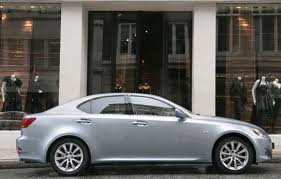
If the three models above have reset at the touch of the engine, not two F-Sport IS model. F-Sport IS 250 and IS 200d M-Sport received refresher exterior and interior. The front of the IS F-Sport was rewarded with a grille and spoiler, fog lamp, which is new. Rear spoiler brake lights hangout and its redesigned alloy wheels.
Aura sporty F-Sport IS forwarded to the interior through the steering wheel, the transmission lever, pedal-pedal and the front seat of a sporty leather and Alcantara. Touch of titanium effect can be found on the door trim as well.
In the UK, the price of the Lexus IS begins to U.S. $ 37,830 (IS 200d SE)
If you are looking for anti-bullet car and the best anti-bomb, please come to the Moscow International Motor in 2010. In the event that was held August 25 to 29 that will be used Jaguar xj Sentinel as a place of self-display.

Jaguar xj Sentinel is the ballistic protection level of B7 saloon. Level B7 - bulletproof 12.7 mm - is the highest grade in the protection against bullets, the lowest is B2. So if there is an enemy of your business you are showered with AK-47 rifles, AK-74AP, M16, or M61, just ignore. Even the Sentinel xj body and floor are also anti-bomb 15 kg of TNT. Jaguar guarantee 80 000 km for Jaguar xj Sentinel.
Jaguar xj Sentinel construction made of super strong steel with Kevlar as supporters. Jaguar took Centigon, one of the specialist anti-ballistic car maker, in making the defense. To ensure that xj Sentinel international protection standards, Jaguar xj Sentinel has obtained a certificate from QinetiQ, an independent organization that tests and ballistic bombs.

Jaguar V8 engine wear, 5000 cc, 385 hp, with six-speed automatic transmission. Saloon is capable of weighing 3.8 tons accelerates 0-100 km / h in 9.7 seconds with a top speed of 195 km / hr.
Jaguar has not released a price. However, Jaguar offers a range of individual choices.
Monday, August 16, 2010
Post-war production

The Volkswagen factory at Wolfsburg was handed over by the Americans to British control in 1945, it was to be dismantled and shipped to Britain. Thankfully for Volkswagen, no British car manufacturer was interested in the factory; “the vehicle does not meet the fundamental technical requirement of a motor-car … it is quite unattractive to the average buyer … To build the car commercially would be a completely uneconomic enterprise.” The factory survived by producing cars for the British Army instead.Allied dismantling policy changed in late 1946 to mid 1947, although heavy industry continued to be dismantled until 1951. In March 1947 Herbert Hoover helped change policy by stating
“There is the illusion that the New Germany left after the annexations can be reduced to a ‘pastoral state’. It cannot be done unless we exterminate or move 25,000,000 people out of it.”

The re-opening of the factory is largely accredited to British Army officer Major Ivan Hirst (1916–2000). Hirst was ordered to take control of the heavily bombed factory, which the Americans had captured. His first task was to remove an unexploded bomb which had fallen through the roof and lodged itself between some pieces of irreplaceable production equipment; if the bomb had exploded, the Beetle’s fate would have been sealed. Hirst persuaded the British military to order 20,000 of the cars,and by 1946 the factory was producing 1,000 cars a month. During this period the car and its town changed their Nazi-era names to Volkswagen (people’s car) and Wolfsburg, respectively. The first 1,785 Beetles were made in a factory near Wolfsburg in 1945.
Following the Army-led restart of production, Heinz Nordhoff was appointed director of the Volkswagen factory, under whom production increased dramatically over the following decade, with the one-millionth car coming off the assembly line by 1955. During this Post-war period, the Beetle had superior performance in its category with a top speed of 115 km/h (71 mph) and 0-100 km/h (0-60 mph) in 27.5 seconds on 7.6 l/100 km (31mpg) for the standard 25 kilowatts (34 hp) engine. This was far superior to the Citroën 2CV and Morris Minor, and even competitive with more modern small cars like the Mini of the 1960s and later.

The engine fired up immediately without a choke, and could only be heard in the car when idling. It had excellent road-handling and was economical to maintain. Although a small car, the engine has great elasticity and gave the feeling of better output than its small nominal size. However, the opinion of people in the United States was not as flattering due to the characteristic differences between the American car market and European car market at the time. Henry Ford II once described the car as ‘A little box’.[citation needed]
During the 1950s, the car was modified progressively: the obvious visual changes mostly concerned the windows. In March 1953, the small oval two piece rear window was replaced by a slightly larger single piece oval rear window. More dramatically, in August 1957 a much larger full width rear window replaced the oval one. 1962 saw the introduction of a widened cover for the light over the rear licence plate. Towards the end of 1964, the height of the side windows and windscreen was slightly increased giving the cabin a less pinched look: this coincided with a the introduction of a very slightly curved windscreen, though the curve was barely noticeable. The same body appeared during 1966, with a 1300 cc engine on place of the 1200 cc engine: it was only in the 1973 model Super Beetle that the beetle acquired an obviously curved windscreen. The flat windshield remained on the standard beetle.

During the 1960s and early 1970s, innovative advertising campaigns and a reputation for reliability and sturdiness helped production figures to surpass the levels of the previous record holder, the Ford Model T, when Beetle No. 15,007,034 was produced on 17 February 1972. By 1973, total production was over 16 million, and by 23 June 1992, there had been over 21 million produced.
The Beetle is the world’s best-selling car design; though more units of the Toyota Corolla brand have been sold, there have been many total redesigns of the Corolla, each amounting to a new car design with the same name.
VW Beetle 1967
The Volkswagen Beetle underwent significant changes for the 1967 model. While the car appeared similar to earlier models, much of the drivetrain was noticeably upgraded. Some of the changes to the Beetle included a bigger engine for the second year in a row. Horsepower had been increased to 37 kilowatts (50 hp) the previous year, and for 1967 it was increased even more, to 40 kilowatts (54 hp).

On US models, the output of the electrical generator was increased from 180 to 360 watts, and upgraded from a 6-volt to a 12-volt system. The clutch disc also increased in size, and changes were made to the flywheel, braking system, and rear axle. New standard equipment included two-speed windscreen wipers, reversing lights, a driver’s armrest on the door, locking buttons on the doors, sealed-beam headlights, and a driver’s side exterior mirror.
It weighed 840 kg (1852 lb), which was a typical weight for a European car at this time. Top speed was 130 km/h (81 mph).
Declines And Fail
Though extremely successful in the 1960s, the Beetle was faced with stiff competition from more modern designs. The Japanese had refined rear-wheel-drive, water-cooled, front-engine small cars to where they sold well in the North American market, and Americans introduced their own similarly sized rear-wheel-drive Ford Pinto, Chevrolet Vega, and AMC Gremlin in the 1970s.

The superminis in Europe adopted even more efficient transverse-engine front-wheel-drive layouts, and sales began dropping off in the mid 1970s. There had been several unsuccessful attempts to replace the Beetle throughout the 1960s; the Type 3, Type 4, and the NSU-based K70 were all failures.
The over-reliance on the Beetle meant that Volkswagen was in financial crisis by 1974. It needed German government funding to produce the Beetle’s replacement. Only when production lines at Wolfsburg switched to the new watercooled, front-engined, front-wheel drive Golf designed by Giorgetto Giugiaro in 1974, (sold in North America as the “Rabbit”) did Volkswagen produce a car as successful as the Beetle.

The Golf would be periodically redesigned over its lifetime with only a few components carried over between models, while the Beetle used only minor refinements of its original design.
The Golf did not kill Beetle production, which continued in smaller numbers at other German factories until January 19, 1978, when mainstream production shifted to Brazil and Mexico, markets where low operating cost was more important. The last Beetle was produced in Puebla, Mexico, in mid-2003. The final batch of 3,000 Beetles were sold as 2004 models and badged as the Última Edición,
with whitewall tires, a host of previously-discontinued chrome trim, and the choice of two special paint colors taken from the New Beetle. Production in Brazil ended in 1986, then restarted in 1993 and continued until 1996. Volkswagen sold Beetle sedans in the United States until August 1977 (the Beetle convertible a.k.a. Cabriolet was sold until January 1980) and in Europe until 1985, with private companies continuing to import cars produced in Mexico even after production of the beetle had ended.

The Beetle outlasted most other automobiles which had copied the rear air-cooled engine layout such as those by Subaru, Fiat, Renault, General Motors and Tatra’s limousines, which ended production in 1999. Porsche’s sport coupes which were originally based on Volkswagen parts and platforms continue to use the classic rear engine layout (but water-cooled and moved forwards) in the Porsche 911 series, which remains competitive in the 2000s.
